
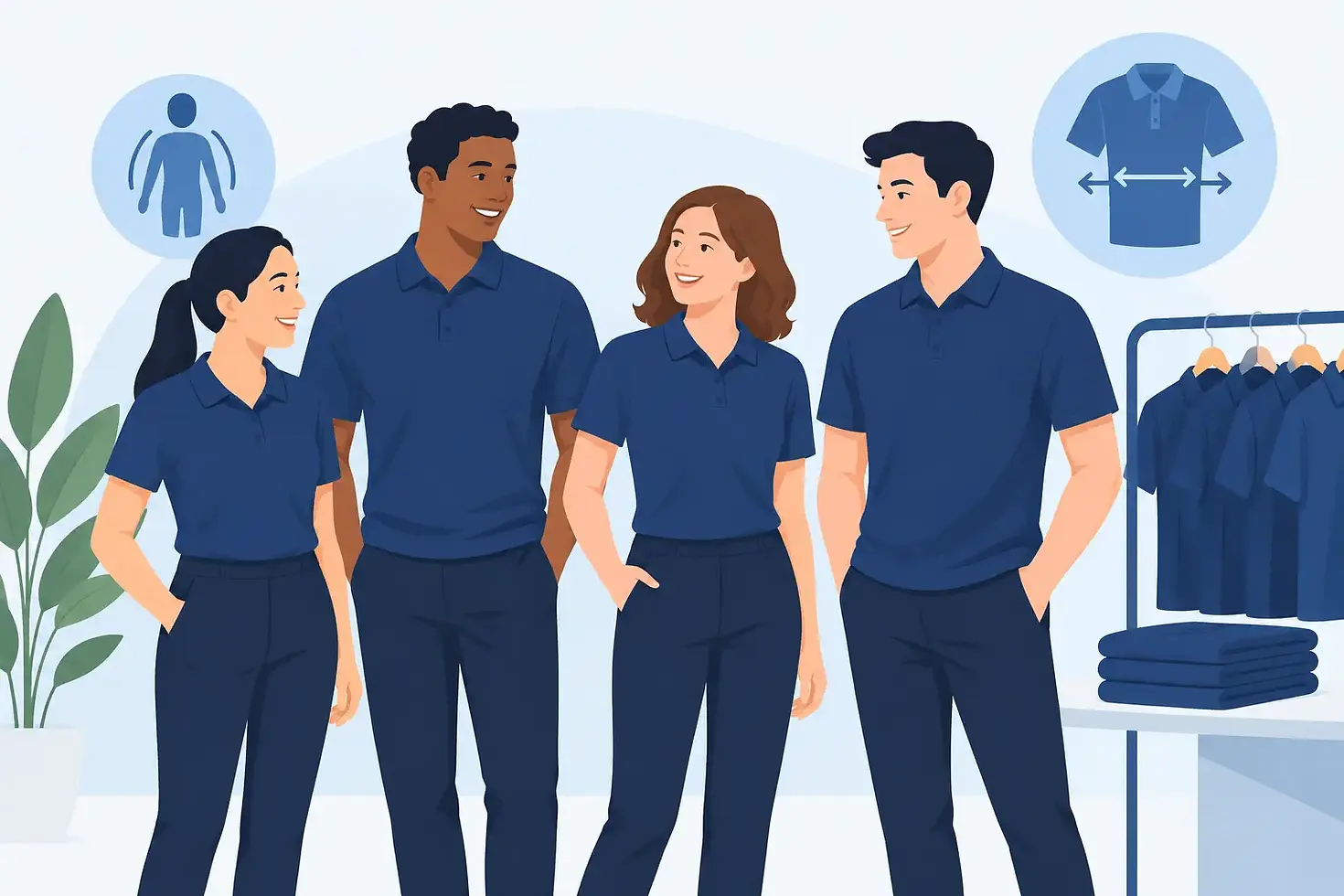
Uniform Sizing That Keeps Teams Comfortable
A logo can look sharp in a digital proof and still miss the mark if the shirt does not fit the person wearing it. Uniform sizing is one of the most practical details behind a professional team appearance, productive employees, and fewer costly reorders. Whether you are outfitting a front office, field crew, sales team, or event staff, the right size plan helps your branded apparel get worn with confidence.
For business buyers, the challenge is rarely choosing between small and large. It is accounting for different garment cuts, job requirements, layering needs, employee preferences, and the realities of ordering for a group. A dependable sizing process protects your budget while giving every employee apparel that represents your company well.
Why Uniform Sizing Is a Business Decision
A uniform is part of the workday. If it binds at the shoulders, rides up while lifting, fits too loosely around machinery, or feels too heavy for the environment, employees notice immediately. They may stop wearing it, request replacements, or choose an unbranded alternative. That reduces the value of the apparel program and weakens the consistent look you intended to create.
Fit also affects how customers perceive your team. A polished polo, quarter zip, dress shirt, or safety vest sends a stronger message when it fits the employee and suits the job. This matters at a customer site, in a showroom, at a trade show, or on a jobsite where identification and safety are central to the work.
The best choice is not always the same style for every department. A lightweight performance polo may work well for outside sales and active field staff, while a structured button-down or full zip may better support client-facing office teams. Sizing must follow the garment and the role, not just a spreadsheet of familiar letter sizes.
Start With the Garment, Not the Size Label
A medium is not a universal measurement. It can vary substantially by brand, fabric, cut, and intended use. A unisex hoodie, a women’s fitted polo, and a men’s dress shirt can all carry a medium label while fitting very differently.
Before collecting sizes, decide which garments each group will receive. Consider the work environment first. Employees working outdoors may need room for base layers under a jacket or safety wear. Warehouse and service teams may need stretch and a fuller range of motion. Hospitality, banking, and professional-services teams may prioritize a cleaner, more tailored appearance.
Fabric changes the fit conversation too. Cotton can feel familiar but may shrink if not handled according to care instructions. Performance fabrics often offer stretch and moisture management, but some cuts can feel more fitted than employees expect. Heavier fleece adds warmth but can add bulk, especially when worn under outerwear. These are not reasons to avoid certain products. They are reasons to select sizes based on the specific garment measurements.
Use the Product Size Chart Every Time
The product size chart is the most useful tool in a uniform order. Ask employees to compare their measurements to the chart rather than selecting the size they usually buy at retail. Chest, waist, sleeve length, inseam, and garment length may all matter, depending on the item.
For tops, chest measurement is often the starting point, but it should not be the only one. Employees who need shoulder mobility or who layer over another shirt may need additional room. For pants and workwear, waist and inseam measurements are more reliable than a general small-to-3XL selection.
It helps to make the process simple: provide the style name, fit type, size chart, and a clear deadline. When employees receive incomplete information, they tend to guess. Guessing is where avoidable exchanges begin.
Build a Size Collection Process Employees Will Use
Your size collection method should fit the order size and the stakes of the program. For a small office order, an organized size form may be enough. For a larger roll-out, a company store or designated ordering page can reduce administrative work and give employees a clearer way to select approved apparel.
Ask for sizes by garment, not as one blanket uniform size. An employee may wear a large polo, an extra-large jacket for layering, and a medium cap. Treating all apparel as one size creates errors before production starts.
Include a final review step before the order is approved. The person managing the program should scan for unusual quantities, missing sizes, or selections that do not align with the assigned role. For example, if an entire field crew ordered fitted polos but needs room for movement and undershirts, it is worth checking before decoration begins.
For first-time programs, samples can be especially useful. Trying on an undecorated sample lets employees assess fabric, mobility, length, and fit before the full order is placed. There is an upfront cost and a little more planning involved, but it can be far less expensive than replacing a large run of embroidered outerwear after the fact.
Plan for Different Fits Without Creating Confusion
Offering men’s, women’s, unisex, tall, or extended sizes can make a uniform program more inclusive and practical. The goal is not to force every employee into one cut. The goal is to create a consistent branded look while giving people options that work for their body and job.
This does require clear communication. Label each option accurately and avoid assuming that unisex means it will fit everyone the same way. A unisex garment can be an efficient choice for event tees, volunteer programs, and casual layers, but it may not deliver the preferred fit for a customer-facing uniform program.
A good approach is to standardize the color, logo placement, and approved garment family while allowing appropriate fit options. That preserves brand consistency without making sizing an unnecessary obstacle.
Do Not Forget Special Requirements
Some roles have needs that go beyond standard sizing. Safety apparel may need to meet visibility requirements and still allow room for layers. Food service employees may need garments that hold up to frequent laundering. Technicians may need longer shirt tails, reinforced work pants, or jackets that do not restrict movement while driving or reaching.
If the uniform includes personal protective equipment, confirm how the branded item will be worn with it. A bulky jacket may not work under certain harnesses or safety gear. In those situations, the most attractive garment is not automatically the right uniform. Function has to lead.
Account for Reorders, Growth, and Turnover
A uniform program does not end when the first boxes arrive. New hires, seasonal workers, promotions, and normal wear all create future demand. If you choose a hard-to-replace style or collect limited sizing information, maintaining a consistent program becomes more difficult later.
Start with a reasonable size run based on your team and anticipated hiring. Ordering a small number of extras in commonly needed sizes can keep a new employee from waiting weeks for branded apparel. The right reserve amount depends on your headcount, turnover rate, and budget, but a modest backstock often prevents rushed decisions.
Keep a record of the exact garment style, color, decoration location, thread or ink colors, and approved proof. This makes repeat orders faster and reduces variation between batches. A company web store can also help eligible employees order from the correct approved selection without sending managers back through the sizing process every time.
At Stay Sharp Custom Apparel, our team helps businesses match apparel choices to their workplace, logo, timeline, and sizing needs before production begins. Clear product guidance and a careful proofing process give buyers more control over a program that may need to serve many different employees.
Common Uniform Sizing Mistakes to Avoid
The most common mistake is treating retail size habits as accurate measurements. Another is selecting a garment solely because it is inexpensive, without considering fabric, fit, and replacement costs. A lower-priced shirt that employees do not wear is not a strong value.
Buyers also run into problems when they overlook layering. A jacket that fits perfectly over a thin tee may feel restrictive over a sweatshirt. Similarly, choosing only one fit category can create frustration when the workforce includes employees with very different needs.
Finally, avoid placing a large decorated order without confirming the final size breakdown. Embroidery and screen printing create durable branded apparel, but decoration also means those items are made specifically for your organization. A few minutes of checking size totals before approval can save substantial time and expense afterward.
A well-run uniform program makes employees feel considered, keeps your brand visible, and gives managers fewer details to chase. Start with the job, choose the right garment, collect sizes against the actual chart, and leave room for the people who will join your team next.


Comments