
How to Choose Moisture Wicking Uniforms for Work
A field technician climbing in and out of a truck, a warehouse associate moving inventory, and an event team working outdoors all have the same problem: a uniform that holds heat and sweat can look tired long before the shift ends. When you choose moisture wicking uniforms, you are not simply buying a more comfortable shirt. You are protecting employee confidence, improving day-to-day wearability, and keeping your brand presentation sharper in demanding conditions.
The right choice depends on where your team works, how hard they move, what your logo needs to look like, and how the garments will be washed. A lightweight polo that works well for a sales crew at an outdoor event may not be the right answer for a landscaping company, healthcare team, or manufacturing facility. Start with the job, then build the uniform program around it.
Why Moisture-Wicking Uniforms Matter on the Job
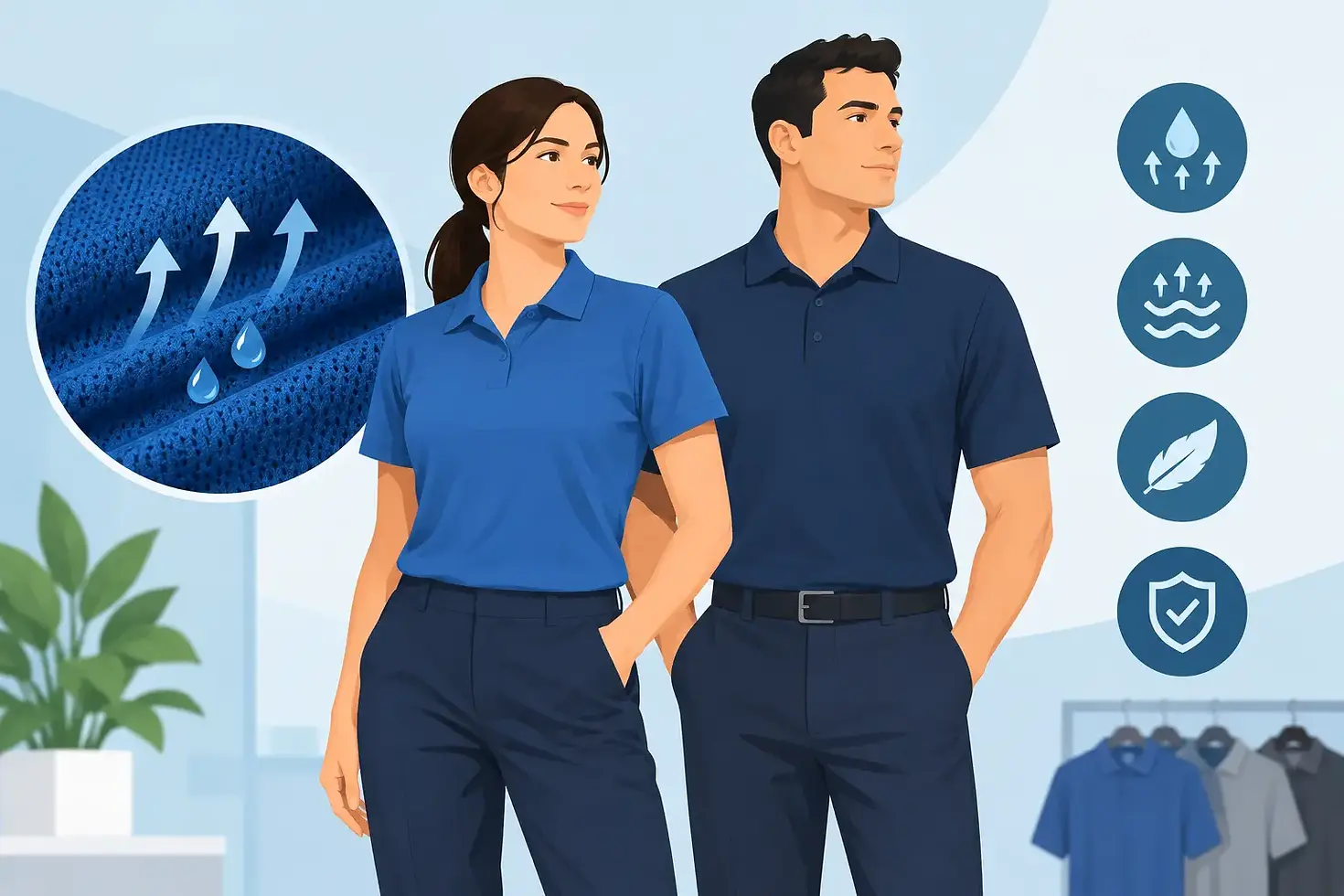
Moisture-wicking apparel is designed to pull perspiration away from the skin and spread it across the fabric surface, where it can evaporate more efficiently. That process helps employees feel drier than they would in a traditional cotton shirt, particularly during active work, warm weather, or high-pressure event days.
Comfort matters because uniforms only work when employees will actually wear them. If a shirt feels heavy, stays damp, or clings after a few hours, employees may layer over it, avoid it, or request an alternative. That creates inconsistency across the team and weakens the professional appearance you intended to create.
There is also a brand consideration. Moisture-wicking polos, tees, quarter zips, and performance work shirts tend to maintain a cleaner, more structured appearance through a long shift. When the fabric, fit, and decoration are selected well, your logo remains visible and your staff looks prepared for customer-facing work.
Choose Moisture Wicking Uniforms Based on the Work Environment
The best performance fabric is not always the thinnest or the most technical option. Begin by identifying the conditions employees face on a normal workday, not only the most extreme day of the year.
For outdoor crews, delivery teams, installers, and field service personnel, prioritize lightweight performance fabric with effective moisture management and a breathable construction. If employees spend meaningful time in direct sun, consider garments with built-in UPF protection. Long-sleeve performance options can be useful for sun coverage, but only if the fabric remains light enough for the climate.
For warehouse, production, and logistics teams, durability may carry as much weight as cooling. Look for performance blends that resist snags, hold their shape, and can handle frequent laundering. A very light athletic tee may feel good initially, but it may not stand up to repeated contact with equipment, cartons, or rough surfaces.
For office, hospitality, sales, and trade show teams, appearance often leads the decision. Performance polos and dressier stretch-woven shirts offer a professional silhouette while still managing moisture. These options help employees stay comfortable during travel, presentations, setup, and long customer interactions without looking overly casual.
Healthcare, food service, and cleaning teams may need to balance performance with specific workplace requirements. Easy-care fabric, color retention, and the ability to withstand frequent washing can be more valuable than premium athletic features. If employees handle chemicals, work around food, or require safety-specific apparel, confirm the garment is appropriate for that use before placing a large order.
Start With Fabric, Not Marketing Language
Many garments are labeled as performance apparel, but performance can mean different things. Review the actual fiber content and construction rather than relying on a product name alone.
Polyester is the most common moisture-wicking fiber because it dries quickly, holds color well, and is generally durable. A 100% polyester polo or tee is often a strong choice for active teams, especially when it has a smooth, breathable knit. However, not every polyester fabric feels the same. Some have a soft cotton-like hand, while others have a slicker athletic feel.
Polyester blends can add stretch, softness, or a more elevated appearance. A small amount of spandex can improve mobility for technicians, hospitality employees, and teams that bend, reach, or move throughout the day. Blends that include cotton may feel familiar and comfortable, but they can dry more slowly than all-polyester options. That is not necessarily a dealbreaker for light-duty indoor work. It simply may not be ideal for employees working in heat or heavy activity.
Fabric weight is another practical factor. Lighter fabrics are cooler and often better for warm conditions, but they may be more transparent, less durable, or more prone to snagging. Heavier performance fabrics offer more structure and can feel more substantial, especially in a polo, but may be too warm for a summer field crew. Requesting samples or reviewing fabric swatches before committing to a company-wide program can prevent an expensive mismatch.
Match the Fit to the Team and the Task
A moisture-wicking shirt cannot perform well if the fit is restrictive. Employees need enough room through the shoulders, chest, and arms to move comfortably, particularly in physical roles. At the same time, an excessively loose fit can look unprofessional and may create safety concerns around machinery or moving equipment.
Offer a size range that supports the full team, including tall and extended sizes when available. This is one area where the lowest-priced garment can create problems. A style with limited sizing may force employees into a poor fit, which affects comfort, morale, and the overall look of the uniform program.
Consider whether your workforce needs unisex, men's, women's, or multiple fit options. A single unisex shirt can simplify ordering, but fit-specific options often produce a better employee experience for customer-facing teams. For smaller organizations, a practical approach may be choosing one core unisex style with a comparable women's companion style for employees who prefer it.
Plan Your Logo Decoration for Performance Fabric
Your logo method should work with the garment, not fight against it. Moisture-wicking fabrics are often smooth, lightweight, and synthetic, which affects how embroidery and screen printing perform.
Embroidery delivers a polished, durable result on polos, quarter zips, jackets, and heavier performance pieces. It is especially effective for left-chest logos and executive-facing uniforms. On very lightweight fabric, though, dense embroidery can pull or pucker the material. The solution may be a simplified logo size, proper backing, or a different decoration method.
Screen printing can be an excellent fit for performance tees, event shirts, and larger back graphics. The ink selection matters. Heavy ink coverage can reduce breathability in the printed area, so a skilled decorator should recommend an approach that keeps the shirt comfortable while preserving strong logo visibility.
For certain garments and brand aesthetics, heat-applied logos may provide a clean, low-profile finish. They can work well on performance wear when applied correctly, but placement and garment compatibility should be reviewed before production. A digital proof is essential, but so is discussing the final garment with a team that understands how different decoration methods behave in real use.
Do Not Overlook Color, Care, and Replacement Needs
Color affects more than brand consistency. Dark colors can feel warmer in direct sun but may hide job-site marks better. Light colors can be cooler and highly visible but may show dirt, sweat, or stains more easily. For field teams, consider a practical primary color and reserve lighter branded styles for customer meetings, trade shows, or office staff.
Ask how frequently employees will wash their uniforms. A garment that looks great after one wear but fades, snags, or loses shape after repeated laundering will increase replacement costs. Follow the care instructions, and avoid assuming that every performance item should be treated exactly like standard cotton apparel. Fabric softeners, for example, can reduce the effectiveness of some moisture-wicking finishes.
It is also smart to think beyond the first order. Choose a style with a reasonable expectation of continued availability, particularly for growing teams or companies that need replacements throughout the year. If a style is discontinued, a close substitute may not match earlier uniforms in color, texture, or fit.
Build a Uniform Program, Not a One-Time Shirt Order
The strongest uniform programs give employees appropriate options without creating a confusing mix of unrelated styles. A field team may need moisture-wicking tees for daily work, polos for customer appointments, and a performance quarter zip for cooler mornings. A sales team may need one elevated polo, one lightweight layer, and a branded cap for events.
Set clear guidelines around approved colors, logo placement, and job-specific garments. This makes reorders easier, supports a consistent brand image, and gives new employees a simple path to getting properly outfitted. For larger teams, an employee web store can make approved uniform ordering more manageable while keeping product selection controlled.
Before ordering, review a proof carefully for logo size, thread or ink colors, placement, and spelling. Then consider ordering a sample or a small test run if the fabric, fit, or decoration method is new to your organization. That extra step is especially valuable when outfitting a large workforce or launching a uniform program that will be used for years.
The best next move is to define what your team does during its hardest shift, not its easiest one. Bring those real working conditions into the selection process, and a knowledgeable apparel partner such as Stay Sharp Custom Apparel can help match fabric, fit, decoration, and turnaround needs to a uniform program your employees will be glad to wear.


Comments