
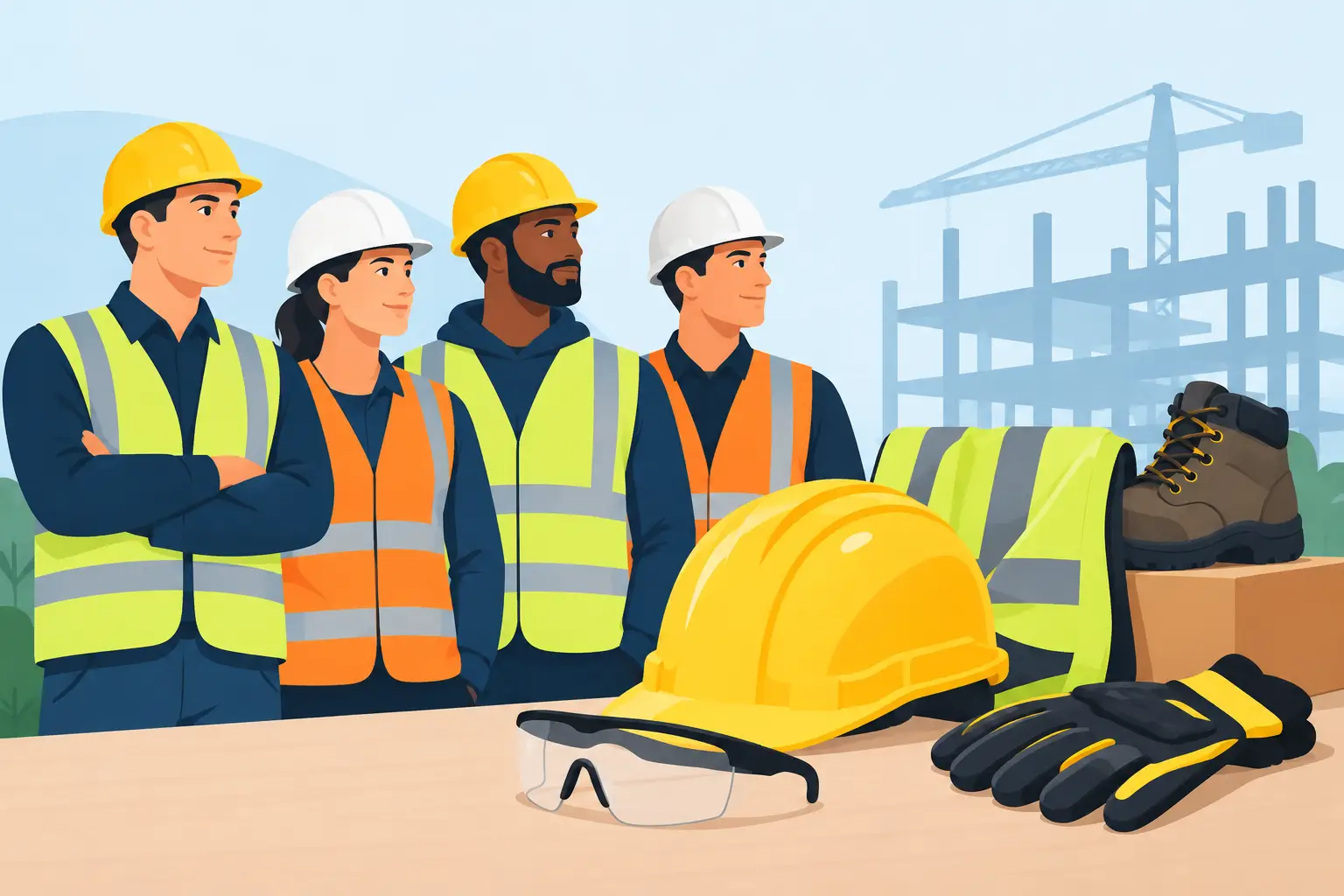
How to Buy Safety Apparel for Your Work Crew
A safety vest that stays in the truck, a logo placed over reflective tape, or a jacket that cannot accommodate winter layers can turn a well-intended order into a costly do-over. Knowing how to buy safety apparel starts with the actual job site, not a catalog page. Your crew needs gear they can wear comfortably, your company needs a professional look, and the order needs to arrive correctly and on schedule.
For operations teams, field service managers, and business owners, safety apparel is both personal protective equipment and a visible extension of the company. The right purchase balances compliance requirements, weather, mobility, decoration needs, and the realities of reordering for a growing team.
How to Buy Safety Apparel by Starting With the Job
Before choosing colors, styles, or logo placement, identify where and how each employee works. A road crew exposed to moving traffic has different visibility needs than a warehouse team operating around forklifts. Electrical, utility, welding, and oil and gas work may require flame-resistant garments. A landscaping crew may need lightweight, breathable high-visibility shirts, while a winter construction team may need insulated outerwear that remains visible over multiple layers.
Ask supervisors what employees are exposed to during a normal shift: vehicle traffic, low-light conditions, heat, rain, sparks, sharp edges, or moving equipment. Also ask what workers currently dislike about their apparel. If safety gear is stiff, too hot, poorly sized, or difficult to layer, employees may wear it inconsistently. That is a performance problem, not just a comfort issue.
Separate employees into job-based groups when necessary. One universal garment can simplify ordering, but it is not always the best operational decision. Office visitors, delivery drivers, field technicians, and roadside crews may all need different levels of protection and visibility.
Confirm Visibility and Safety Requirements
High-visibility apparel is often selected based on ANSI/ISEA 107 classifications, which address garment design, background material, reflective material, and intended use environments. The appropriate class depends on factors such as traffic speed, worker proximity to vehicles, work zone complexity, and visibility conditions.
Do not assume that any neon shirt or reflective vest qualifies for a required standard. Check the garment label and product specifications. If a contract, customer site, municipality, or internal safety policy specifies a standard or class, purchase to that requirement rather than choosing by appearance alone.
The same caution applies to flame-resistant apparel. FR garments are designed for specific hazard categories and standards, and decoration can affect the garment's performance. When workers need FR gear, confirm the required standard with your safety manager or the job-site requirement, then choose compatible decoration methods and materials. A branded garment should never compromise its protective purpose.
Visibility colors also matter. Fluorescent yellow-green and fluorescent orange-red are common choices, but a customer specification or work environment may dictate one over the other. The goal is contrast with the surrounding environment, especially at dawn, dusk, in poor weather, or near equipment.
Choose Fabric for the Conditions, Not the Shelf
A garment can meet a visibility requirement and still be the wrong choice for the work. Fabric weight, breathability, stretch, durability, and moisture management all affect whether employees will wear it through a full shift.
For hot conditions, lightweight polyester performance fabrics can help workers stay cooler and dry faster than heavy cotton. The trade-off is that lower-cost performance shirts may snag or retain odor more easily. For rugged work, heavier fabrics, reinforced seams, and ripstop construction can extend garment life, though they may feel warmer and less flexible.
Outerwear deserves its own evaluation. A water-resistant soft shell may be enough for occasional drizzle and active work. A waterproof jacket is better for sustained rain, but it can be less breathable. Insulated jackets work well for cold climates, yet crews performing physical labor may overheat quickly. Layering often provides the most practical answer: a high-visibility base layer or shirt, a midlayer for warmth, and an outer layer suited to rain or wind.
Consider the wash cycle, too. Safety apparel faces dirt, grease, sun exposure, and frequent laundering. Review care instructions before ordering. Reflective trim and fluorescent fabric can lose effectiveness over time, particularly when washed improperly. Buying slightly better construction can reduce replacement costs when the apparel is used hard.
Get Sizing and Fit Right Before Production
Sizing is one of the most common sources of apparel frustration. Safety vests need enough room to go over uniforms, hoodies, or jackets. Work shirts need range of motion through the shoulders and arms. Outerwear needs room for layering without becoming baggy enough to catch on equipment.
Collect sizes from employees rather than estimating from a prior order. If possible, request a sample size run for key garments, especially when you are switching brands or ordering fitted styles. A size chart is useful, but it does not replace trying on a garment when a large team depends on it.
Plan for the workforce you actually have. Include women’s fits where appropriate, extended sizes, and enough extra garments for new hires, damaged items, and short-term visitors. For a larger program, an employee web store can simplify individual ordering while maintaining approved styles, colors, and logo treatments.
Plan Your Logo Around the Safety Features
Branding safety apparel requires more planning than branding a standard polo. Reflective striping, pockets, zippers, seams, and garment construction all limit available decoration areas. Your logo should remain clear and professional without covering reflective material or interfering with a compliance label.
Embroidery creates a polished, durable look on jackets, polos, and certain workwear, particularly for chest logos. Screen printing is often a strong choice for larger graphics on shirts, vests, and backs. The right method depends on fabric, logo detail, order quantity, expected wear, and the garment’s safety requirements.
Keep the design readable from the distance that matters. A tiny multicolor logo may look sharp at a desk but disappear on a job site. Often, a simplified logo treatment in a high-contrast thread or ink delivers better visibility and a cleaner uniform program. A digital proof is your opportunity to verify location, scale, colors, spelling, and garment selection before production begins.
Build an Order That Holds Up Over Time
The lowest unit price is not always the lowest total cost. Under-ordering forces rush reorders, creates inconsistent apparel, and may leave new employees without required gear. Over-ordering too many sizes or highly specific items can create inventory that never gets used.
Start with your headcount, then account for replacements and near-term hiring. For employees who wear safety apparel daily, two to three garments per person can make laundering easier and reduce wear. Seasonal items can be ordered separately when storage space or budget is limited.
Standardize whenever practical. Choosing a defined set of approved safety shirts, vests, jackets, and headwear makes reorders faster and helps your team present a consistent image across locations. Keep a record of garment styles, colors, logo files, thread colors, print locations, and approved proofs. That record turns the next order into a repeatable process instead of a fresh search.
Work With a Supplier That Checks the Details
A dependable supplier should ask questions about the work environment rather than simply take a garment and logo request. They should help you confirm decoration placement, provide a clear proof, explain timing, and flag issues before they become production errors.
This matters most when deadlines are tight. A trade contractor mobilizing for a new project, a utility team preparing for storm season, or a service company onboarding a new branch may need branded safety apparel quickly. Fast turnaround only helps when the proofing process, inventory checks, and decoration quality are managed carefully.
Stay Sharp Custom Apparel works with business buyers to match branded apparel to job functions and workplace conditions, then keeps the process moving with in-house embroidery, clear proofs, and responsive support. The best partner makes the order easier to manage without treating a safety program like a one-size-fits-all transaction.
Make the First Order Easier to Repeat
Before placing the order, confirm the garment style and color, safety classification where required, size breakdown, decoration method, logo location, proof approval, quantity, and delivery date. Share care instructions with employees once the apparel arrives, particularly for high-visibility and FR garments.
Then pay attention to feedback from the field. If workers ask for more breathable shirts, warmer layers, larger vests, or different pocket configurations, use that information on the next order. The most effective safety apparel program is one your crew can wear confidently, comfortably, and correctly every day.


Comments