
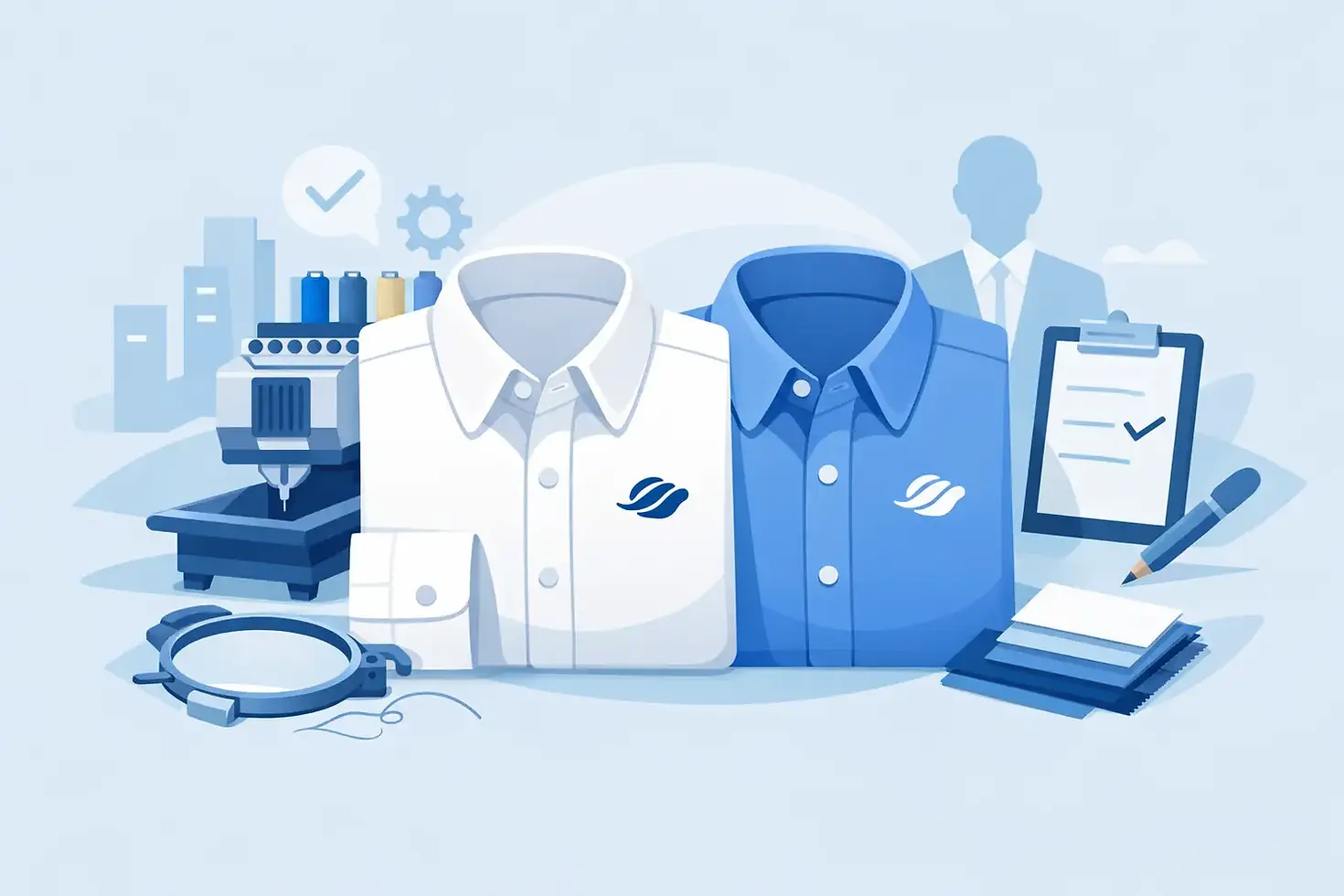
Embroidered Dress Shirts With Logo That Work
The wrong shirt shows up fast. It wrinkles by 10 a.m., pulls at the buttons, or makes your team look like they borrowed uniforms from another company. That is why embroidered dress shirts with logo are not just a branding choice. They are a presentation tool for sales teams, office staff, managers, event crews, and anyone who represents your business face to face.
For many companies, dress shirts sit in a specific lane. They need to look polished enough for meetings and client visits, but still hold up through real workdays, repeated washing, and varied body types across a team. When they are chosen well, they support your brand without feeling overdone. When they are chosen poorly, they become expensive closet fillers.
Why embroidered dress shirts with logo make sense
A dress shirt with embroidery sends a different signal than a printed tee or casual polo. It reads as more formal, more established, and more intentional. That matters for industries where appearance affects trust - professional services, real estate, finance, hospitality, healthcare administration, construction management, and field service leadership are all good examples.
Embroidery also tends to be the right decoration method for dress shirts because it matches the structure of the garment. A stitched logo holds its shape, looks clean on woven fabrics, and keeps a professional finish over time. Screen printing has its place, but on a classic button-down it often feels less aligned with the product itself.
That said, not every company needs dress shirts for every role. If your staff works in high-heat environments, physically demanding conditions, or highly casual settings, a polo, work shirt, or performance piece may be the better call. The right answer depends on where the shirt will be worn, how often it will be washed, and what image the wearer needs to project.
Start with the work environment, not the logo
One of the biggest mistakes buyers make is choosing based on appearance alone. A shirt may look great in a catalog photo and still fail in your day-to-day operation. Before you think about thread color or logo size, define the job the shirt needs to do.
If the shirts are for office staff, sales reps, or front-desk teams, a lightweight poplin or easy-care blend usually makes sense. It gives a cleaner silhouette and a more traditional business look. If the shirts are for managers moving between office and jobsite, wrinkle resistance and durability move higher on the list. If they are for events or hospitality use, comfort through long hours matters just as much as appearance.
This is where fabric choice has real consequences. Cotton can feel premium and breathable, but it may wrinkle more. Polyester blends often offer easier maintenance and better color retention, but some can feel less elevated depending on the style. Stretch blends can improve comfort and fit, especially for active roles, though they may come at a higher price point.
There is no single best fabric. There is only the best fabric for how your team actually works.
Fit matters more than most buyers expect
A strong logo cannot fix a poor fit. If the shirt pulls across the chest, balloons at the waist, or has sleeves that look oversized, the branding loses impact. For team apparel programs, fit is usually the difference between shirts people wear and shirts they avoid.
Classic fit styles can work well for broader teams because they offer room and flexibility across different body types. Modern or tailored fits look sharper, but they can be less forgiving in group orders if sizing data is limited. For that reason, many businesses lean toward balanced fits that look current without running too slim.
It also helps to think about gender-specific options. A unisex approach may seem easier on paper, but it often creates fit issues that affect comfort and appearance. Offering men’s and women’s companion styles usually produces a more professional result.
For larger programs, sizing support and proofing matter. A dependable ordering process reduces costly mistakes and helps avoid the common problem of one department loving the shirts while another refuses to wear them.
Logo placement should look intentional
With embroidered dress shirts with logo, placement is usually straightforward, but small decisions still affect the final look. The left chest remains the standard for good reason. It is professional, recognizable, and works across most industries without overpowering the garment.
That does not mean every logo belongs there at the same size. A logo that looks balanced on a polo can feel oversized on a dress shirt, especially if the shirt has a finer weave or a more formal silhouette. Detail also matters. Very intricate logos may need slight adjustments to embroider cleanly at chest size.
In some cases, a tone-on-tone or low-contrast embroidery treatment creates a more premium look, especially for executive apparel or client-facing teams. In other cases, brand visibility matters more, and full-color embroidery is the right move. The best choice depends on whether the shirt is meant to function as uniform apparel, branded gifting, or presentation wear.
Not all dress shirts serve the same purpose
Business buyers often group all button-downs together, but there are meaningful differences between categories. A traditional office dress shirt is not the same as a work-ready woven shirt, and neither is the same as a lightweight branded shirt for trade shows or travel.
For executive teams or client meetings, a cleaner dress shirt with subtle embroidery usually works best. For everyday branded uniforms, easy-care woven shirts with stronger durability may be more practical. For onboarding kits or internal company stores, it can make sense to offer a few approved options so employees can choose the style that fits their role and preference.
This is also where budget strategy matters. If the shirt is being worn weekly, spend accordingly. If it is intended for occasional conferences or annual events, you may not need the same construction level. Matching the product to the use case keeps the program efficient.
Quality control is not a small detail
A dress shirt is less forgiving than a hoodie or tee when it comes to embroidery quality. Crooked placement, puckering around the logo, or thread colors that miss the brand standard stand out immediately. That is why proofing and production control matter so much on this category.
For business apparel, consistency is part of the value. If one department receives shirts with a logo placed too high and another gets a different shade of thread, the result looks disjointed. A strong process should cover logo setup, placement approval, garment selection, and final production review before the order ships.
That is especially important for repeat orders. Once you have approved the right shirt, logo size, and thread treatment, future ordering should be simpler and more consistent. Buyers managing uniforms or multi-location teams benefit from that kind of operational reliability.
When embroidered dress shirts with logo are the right investment
These shirts make the most sense when your team needs to look polished and brand-aligned in front of customers, partners, or leadership. They also work well when your company wants branded apparel that feels more elevated than standard casual wear.
They may be the right fit for onboarding programs, office uniforms, sales meetings, trade shows, hospitality management, banking, property management, and leadership apparel. They can also work as client gifts when paired with a high-quality garment and tasteful branding.
They are not always the best value for large, rough-use environments where durability and wash frequency outweigh presentation. In those cases, industrial work shirts, polos, or performance apparel may produce better long-term results. Good branded merchandise buying is not about picking the fanciest option. It is about choosing what performs best in context.
What to look for in a supplier
If you are ordering logo dress shirts for a business, you need more than access to product catalogs. You need guidance on garment selection, a clear proofing process, and production standards that protect brand consistency. Speed matters too, especially when apparel is tied to hiring, events, or seasonal programs.
A capable partner should help you narrow the field based on role, environment, and budget instead of pushing a one-size-fits-all option. They should also understand when to recommend a different product entirely. That kind of consultative support saves money and usually leads to a stronger final program.
At Stay Sharp Custom Apparel, that is exactly how we approach embroidered apparel orders - by matching the product to the job, confirming the details before production, and keeping quality and turnaround on track.
The best embroidered dress shirt is not the one with the highest price tag or the trendiest cut. It is the one your team is willing to wear, your brand is proud to show, and your operation can reorder without second-guessing every detail.


Comments