

Corporate Embroidery Ordering Guide for Teams
- staysharpembroidery
- 5 days ago
- 6 min read
A corporate apparel order can look simple until the details start stacking up: multiple departments, mixed garment sizes, logo placement, color approvals, deadlines, and employees who work in very different conditions. This corporate embroidery ordering guide helps you organize those decisions before production starts, so your team receives branded apparel that looks consistent, feels right for the job, and arrives ready to wear.
Start With the Job, Not the Garment
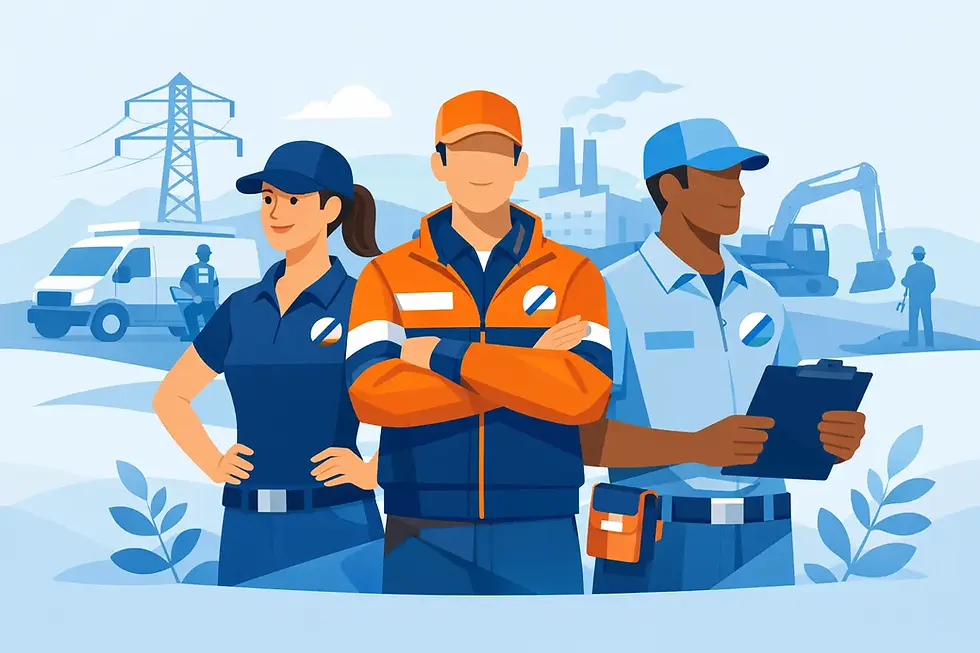
The right embroidered polo for a client-facing sales team may be the wrong choice for a warehouse crew, field technician, or outdoor construction supervisor. Before selecting styles, define who will wear the apparel, where they will wear it, and what the garment needs to do during a normal workday.
Office and sales teams often need polished, lightweight polos, quarter zips, dress shirts, and full zips that present well in meetings and on customer visits. Field service teams may need durable work shirts, performance layers, high-visibility safety wear, or weather-ready outerwear. A company planning apparel for a trade show may prioritize a clean visual presentation and easy sizing, while a growing operation may need uniform options that can be reordered consistently for new hires.
This is also where budget decisions become more useful. Lower-cost garments can work well for event giveaways or large volunteer groups. For daily uniforms, a more durable garment can deliver better value because it holds its shape, color, and embroidery through repeated wear and washing. The lowest unit price is not always the best operational choice.
Build Your Order Around a Clear Use Case
A strong order begins with a short internal brief. It does not need to be complicated, but it should answer practical questions before artwork and apparel selections move forward. Identify the purpose of the order, who needs approval, the target delivery date, expected quantities, and whether employees will be choosing their own sizes.
If several groups are involved, separate them by role rather than trying to force everyone into one garment. For example, your leadership team may receive premium quarter zips, customer-facing employees may wear polos, and field crews may need moisture-wicking shirts or safety apparel. They can all carry the same logo while serving different needs.
Think ahead about replenishment, too. If you expect to hire regularly or maintain a uniform program, choose core styles and colors that are likely to remain available. Small fashion changes can be fine for a one-time event, but they can complicate reorders six months later.
Decide What Must Stay Consistent
Most organizations should set a few non-negotiables for branded apparel: approved logo files, approved logo colors, placement standards, and garment color options. These guardrails protect your brand when different departments place orders over time.
Consistency does not mean every garment has to match exactly. A navy polo, charcoal quarter zip, black cap, and safety yellow work shirt can all support the same brand if the logo treatment is planned correctly. The goal is a recognizable, professional system, not a one-size-fits-all uniform.
Prepare Artwork Before You Request a Quote
Embroidery begins with a logo file, but not every file produces the same result. Clear vector artwork is usually preferred because it preserves clean edges and accurate proportions. Files such as AI, EPS, PDF, or SVG are often ideal. A high-resolution PNG can work in some cases, while a small image pulled from a website or email signature may need to be recreated or cleaned up.
Share the original logo whenever possible, along with brand color information if you have it. This gives your embroidery partner the best reference for thread selection. Thread colors are matched closely, but embroidery uses physical thread rather than digital ink. Very subtle gradients, fine color transitions, and tiny details may need to be simplified to stitch cleanly.
Small text deserves special attention. What looks readable on a computer screen may become difficult to reproduce at left-chest size. In some cases, an embroidered logo needs a simplified version for hats, polos, or sleeves, while a fuller logo can be used on larger garments or printed materials. That is not a compromise in quality. It is a practical adjustment that makes the finished piece easier to read.
Understand Digitizing and Proofing
Your logo must be digitized before it can be embroidered. Digitizing is the process of translating artwork into a stitch file that tells the embroidery machine how to build the design. It determines stitch direction, density, sequence, and how the logo behaves on a specific type of fabric.
A digital proof gives you the opportunity to confirm logo size, placement, thread colors, spelling, and garment details before production. Review it carefully with the people responsible for brand standards. Pay close attention to small type, registered marks if applicable, and whether the logo is centered correctly for the intended location.
Do not treat the proof as a formality. Once production is approved, changes can affect timing and cost. A deliberate proofing process is one of the best ways to prevent avoidable delays and keep a large order on track.
Choose Garments That Embroider Well
Not every fabric behaves the same way under embroidery. Stable fabrics such as pique polos, twill shirts, fleece, and many performance fabrics are popular choices because they support clean stitching. Very thin, stretchy, or loosely knit materials can still be embroidered, but they may require additional backing, careful digitizing, or a different logo size.
The garment color matters as much as the style. Consider how the logo thread will contrast against the fabric. A dark logo on a dark garment can disappear from a distance, and white thread may not provide enough presence on very light colors. If your brand uses several colors, ask whether every detail will remain visible at the final embroidered size.
Placement should match the garment and the purpose. Left chest is the standard for corporate polos, button-downs, quarter zips, and outerwear because it looks professional and remains visible during everyday wear. Hats may use front-center embroidery. Sleeves, collars, and upper backs can add value for certain uniforms or event apparel, but each additional location adds production complexity and cost.
Get Sizes and Quantities Right the First Time
Sizing is one of the most common sources of corporate apparel frustration. Generic size estimates can work for a giveaway, but they create unnecessary risk for uniforms or apparel employees will wear regularly. Whenever possible, collect individual size selections using a standardized form, size chart, or company web store.
For bulk orders without individual selections, use your employee roster and past apparel orders as a starting point. Avoid ordering only the middle sizes. Most teams need a realistic spread across small through extended sizes, and availability can vary by garment style.
Include a modest buffer when your budget allows. Extra pieces are useful for new hires, replacement needs, last-minute event attendees, and size exchanges. The right buffer depends on your headcount and hiring pace, but ordering a few additional core garments is often more efficient than placing a small rush reorder later.
Plan Backward From Your In-Hands Date
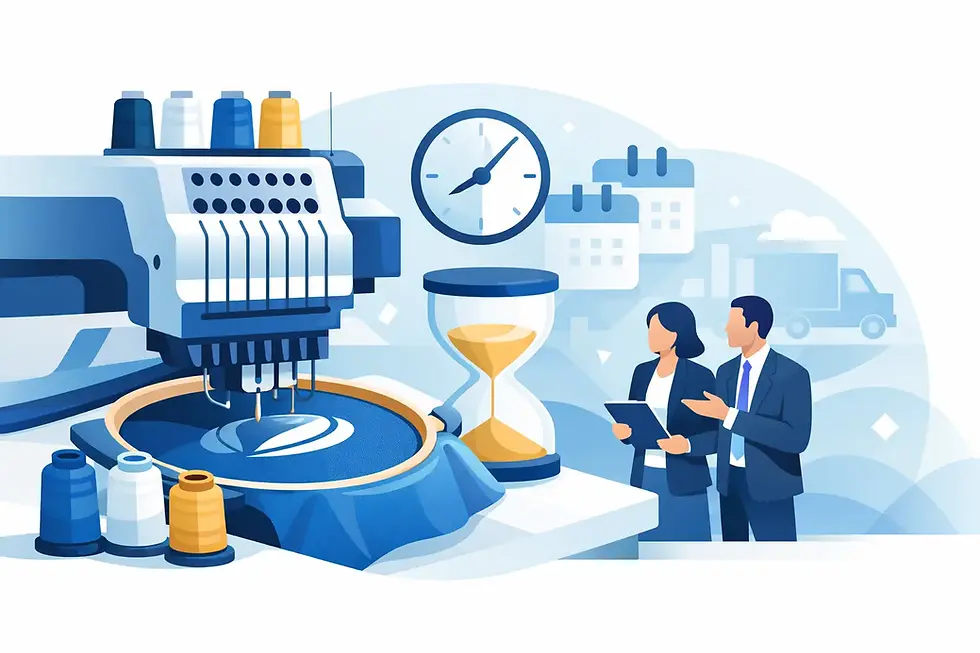
Your delivery date should be the date the apparel is physically in your hands, not the date you hope production begins. Work backward from your event, onboarding day, customer meeting, or seasonal rollout. Leave time for product selection, artwork review, proof approval, production, shipping, and internal distribution.
Fast turnaround is valuable, especially when a team needs apparel quickly. Still, the best way to protect a deadline is to provide complete information early: garment choices, quantities by size, artwork, decoration locations, shipping details, and a clear approval contact. Missing details slow an order more often than production itself.
If timing is tight, be open to recommended alternatives. A similar polo in a readily available color or a comparable quarter zip with stronger inventory may protect your deadline without compromising your brand presentation. An experienced provider should explain those trade-offs clearly rather than simply taking the order as submitted.
Make Reordering Easier Than the First Order
The first order establishes the system. Save the approved artwork, digitized logo information, garment styles, colors, placement details, and thread choices. This record helps maintain consistency when another location, department, or office administrator needs to reorder.
For companies with ongoing apparel needs, a company web store can reduce manual work. Employees can select approved items and sizes within a controlled assortment, while your organization keeps branding, product choices, and ordering rules consistent. This is particularly useful for multi-location teams, employee recognition programs, seasonal uniform needs, and new-hire kits.
Stay Sharp Custom Apparel helps businesses make these decisions with in-house embroidery, clear proofing, and practical product recommendations based on where the apparel will be worn. The goal is not simply to put a logo on a garment. It is to create branded apparel your people are comfortable wearing and your company is proud to put in front of customers.
When you treat embroidery as part of your uniform and brand system, the order becomes easier to manage. Start with the work your team does, approve the details that matter, and choose apparel built to represent your business well long after the first delivery.

Comments