

Branded Promotional Products for Businesses
- staysharpembroidery
- Jun 4
- 5 min read
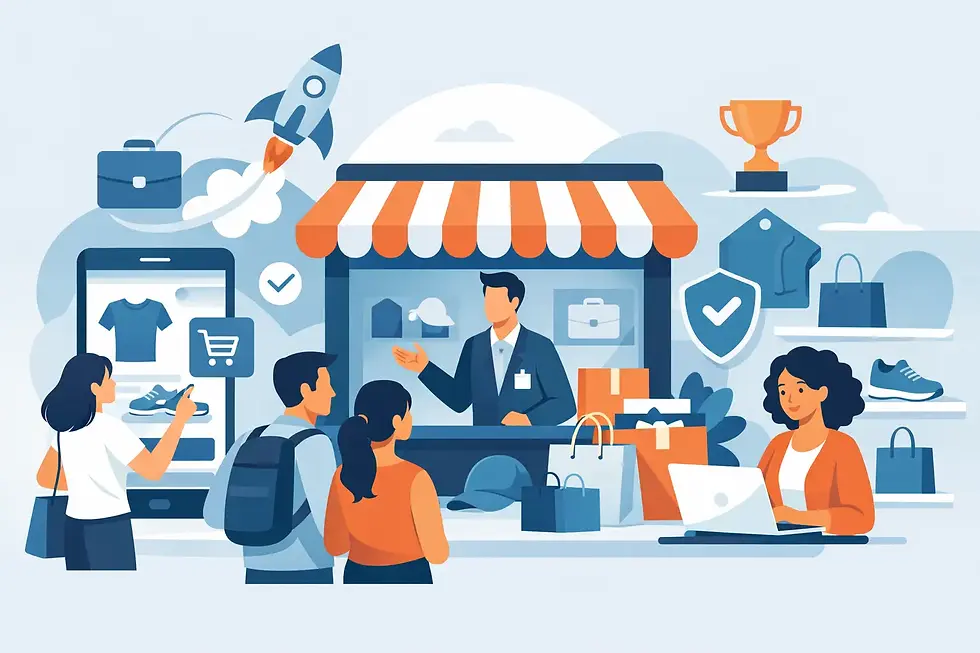
A rushed merch order usually shows up in obvious ways - a giveaway nobody keeps, shirts employees will not wear again, or a logo placed on the wrong product for the job. That is why branded promotional products for businesses work best when they are chosen with purpose, not just ordered to fill a table at an event or spend down a budget.
For business buyers, the real question is not whether promo items work. It is whether the products match the audience, the setting, and the way your company actually operates. A construction team needs something very different from a software sales team. A hiring campaign calls for a different mix than an executive gift program. The strongest branded merchandise programs are built around use, consistency, and speed to execution.
How branded promotional products for businesses actually perform
Promotional products are often treated like extras. In practice, they can support several business goals at once. They can reinforce your brand in the field, help employees look unified, improve event visibility, and give prospects or clients something tangible that keeps your company top of mind.
That only happens when the item has a clear role. A branded polo does more than display a logo. It helps customer-facing staff present a consistent image. A quarter zip for leadership or sales teams can make your brand look polished in meetings, trade shows, and travel settings. A safety shirt or hi-vis outerwear piece does not just promote your business - it supports compliance and day-to-day use on the job.
The same logic applies to non-apparel items. A tumbler, notebook, or tech accessory can be effective if it fits the audience and the occasion. If it feels random or low-value, it tends to disappear fast. Business buyers get better results when they stop asking, "What can we put our logo on?" and start asking, "What will this person actually use?"
Choosing branded promotional products for businesses by purpose
The fastest way to waste a merch budget is to choose products before defining the goal. Most business orders fall into a few practical categories, and each one benefits from a different product mix.
Employee uniforms and internal brand consistency
When the goal is daily wear, comfort and job fit matter more than novelty. Office staff may need embroidered polos, full zips, or dress shirts that present well without feeling stiff. Warehouse and field teams may need moisture-wicking tees, durable layers, headwear, or safety wear that stands up to the environment.
This is where product guidance matters. A brand should look consistent across departments, but the items themselves should not be identical if the work is different. Trying to force one garment across every role often creates frustration and low adoption.
Trade shows, recruiting, and events
Event merchandise has to work quickly. You need visibility at the booth, wearable branding for staff, and a giveaway people will not toss before they reach the parking lot. Apparel can anchor the team appearance, while practical promo items support recall after the event.
There is a trade-off here. Lower-cost giveaways can stretch your quantity, but they rarely create much impact if quality is too low. On the other hand, premium items can leave a stronger impression, but only if you are putting them in the hands of the right prospects. For many companies, the smart move is a layered approach - broad-use giveaway items for traffic, and better products reserved for qualified conversations or follow-up gifting.
Client gifts and account retention
Client gifting should feel intentional, not generic. Better gifts usually come from better audience matching. A useful premium item with clean branding often outperforms a louder product with oversized decoration.
Subtlety matters more in this category. A client may wear a tasteful quarter zip or use a quality desk item regularly. They may not want something that looks like event swag. The closer the product feels to a real gift, the more likely it is to stay in use.
Company stores and ongoing ordering
For businesses with multiple teams, locations, or recurring needs, the challenge is rarely picking one product. It is creating an easy way to reorder approved items without starting from scratch every time. A company store can help standardize branded merchandise, control brand presentation, and reduce the back-and-forth that slows down repeat ordering.
This is especially useful when different employee groups need access to different products, sizes, or decoration methods. It keeps the brand cleaner and makes scaling easier.
What separates good merch from expensive clutter
Most buyers have seen both sides of this. One item gets used for months or years. Another goes straight into a drawer. The difference usually comes down to three things: relevance, quality, and execution.
Relevance starts with the user. If the product matches the person and the setting, it has a much better chance of delivering value. A branded hoodie may be a strong fit for internal culture or recruiting. It may be the wrong fit for a formal client presentation. A premium polo may be perfect for a service team visiting customers. It may not hold up in a high-abrasion field environment.
Quality matters because your logo inherits the product experience. If the shirt shrinks badly, the stitching is off, or the print feels cheap, your brand takes the hit. That does not mean every order has to be top-tier premium. It means the product should be appropriate for the use case and decorated well.
Execution is where many programs break down. Proof accuracy, logo placement, color consistency, sizing, and production timing all shape the final result. For business buyers on a deadline, speed without control is risky. A fast turnaround only helps if the order arrives correct.
Apparel, promo items, and when each makes sense
Apparel often gives businesses the strongest long-term visibility because people wear it repeatedly. It also helps create a professional, unified appearance for staff. Embroidered polos, quarter zips, hoodies, tees, hats, and outerwear all have a place, depending on your audience and workplace.
Promotional items tend to be strongest when you need volume, portability, or variety. They can support events, handouts, welcome kits, direct mail campaigns, and client gifting. They also work well as add-ons to apparel orders, especially when you want a broader branded package.
In many cases, the best answer is not apparel or promo products. It is a coordinated combination. A sales kickoff might need staff apparel plus notebooks and drinkware. An onboarding kit might combine a branded tee, hat, and practical desk item. A field service rollout might include uniforms, safety gear, and accessories that support daily work.
That is the difference between ordering products and building a merchandise program. One is transactional. The other is tied to a business purpose.
What business buyers should ask before placing an order
Before approving any branded merchandise, it helps to pressure-test the order. Who is this for? Where will it be used? How long does it need to last? Does the product support the image your company wants to project? Is the logo treatment right for the item? Are you buying for immediate impact, long-term wear, or both?
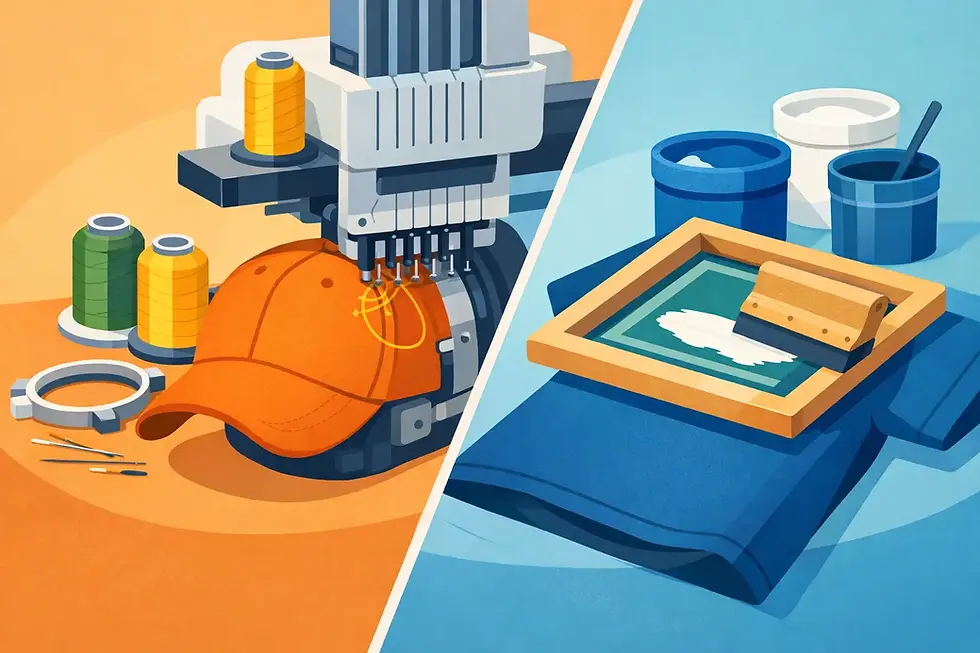
Those questions matter because every merch decision carries trade-offs. Screen printing may be the right choice for certain garment types and quantities, while embroidery may be better for a polished corporate look. A lower-cost tee may work well for a one-time event, but a more durable garment may make more sense for weekly employee wear. There is no single best product category. There is only the right fit for the job.
An experienced merch partner should help you sort through those decisions instead of simply taking the order. That includes steering you toward products that fit your work environment, explaining decoration options clearly, providing accurate proofs, and keeping production on schedule. Stay Sharp Custom Apparel is built around that kind of consultative support because business buyers do not just need options - they need the right options, delivered correctly and on time.
Branded merchandise works best when it earns its place. If the product is useful, well-made, and aligned with the way your business shows up in the world, people keep it, wear it, and remember who it came from.

Comments